
India's first unicorn Zomato will make its stock market debut on Friday, marking a historic moment for the domestic capital market. As per initial schedule, Zomato's listing was to take place on July 27. However, investment banks managed to complete the share allotment and listing formalities ahead of the deadline. Under the Sebi framework, the timeline between IPO closing and listing has to be six working days. Zomato's IPO had closed on July 16.

Indians are more vulnerable to technology support-related scams compared to the global average, and lost over Rs 15,000 on average in such scam, a Microsoft research has found. According to the 2021 Global Tech Support Scam Research report, which looks at tech support scams and their impact, consumers in India experienced a relatively high scam encounter rate of 69 per cent during the past 12 months, close to the 70 per cent rate experienced in 2018. In contrast, there was an overall five-point drop in scam encounters globally with a rate of 59 per cent over the same period. The survey was conducted in Spring 2021 and asked consumers to share their experiences with tech support scams for the year prior (January 2020 to present).

According to its DRHP filed in 2010, the company's net worth was just Rs 140 crore. Its total income for the financial year 2009-10 stood at Rs 119 crore and it had a net profit of Rs 16 crore. In sharp contrast, at the end of March 2021, Paytm's networth was Rs 6,535 crore and total income stood at Rs 3,187 crore.

Political controversies aside, Twitter's business in India is expanding, and creating opportunities for Indians, reports Neha Alawadhi.

'We work with a very large restaurant base, we make sure that we're doing the right thing by them, and we're helping them grow because we'll grow only when they do.'
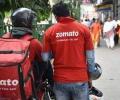
Zomato could get added to the MSCI and FTSE indices by the end of this year, while an entry to the Nifty or the Sensex would be challenging before the second half of 2022, said Brian Freitas, an analyst at independent research provider Smartkarma, in note. "With nearly the entire pre-IPO shares locked up for one year, the free float will be very low and the stock will need to move higher to around Rs 328 per share (4.3 times over possible IPO price of Rs 76) to be included in the Nifty index (with no change in the market cap of the smallest index constituent). "We can be reasonably certain that Zomato will not be included in the Nifty index till the September 2022 rebalance at the earliest," he said.

When the Delhi police served him a notice in May for a case involving tagging some political leaders' tweets as carrying manipulated media, a spirited Maheshwari said he was employed by Twitter Communications Private Limited, and not Twitter Inc, and, therefore, could not help them. The authorities were understandably not pleased.
Food delivery company Zomato's Rs 9,375-crore initial public offering (IPO) will open for subscription on July 14, said investment banking sources on Wednesday. The company initially was looking to raise Rs 7,500 crore through the offering. Investment banking sources said the issue size has been increased because of the robust demand from investors.

The National Company Law Appellate Tribunal (NCLAT) on Wednesday closed insolvency proceedings against Oyo and one of its subsidiaries, and also disallowed the intervention of external parties including Federation of Hotel & Restaurant Associations of India (FHRAI). Industry body FHRAI said in May it has been allowed by the NCLAT to intervene on behalf of hotels in the Oyo unit insolvency case before the tribunal. The association had filed the application on behalf of its member hotels in India, who it said at the time are operational creditors suffering hugely on account of non-payments of debt by Oyo.

Alleging "anti-competitive practices" by Zomato and Swiggy, restaurant industry body National Restaurant Association of India (NRAI) on Monday said it has approached fair trade regulator Competition Commission of India (CCI) for a detailed probe against the food aggregators. Keeping the interests of restaurants in mind, NRAI on July 1 had filed information with the CCI, it said in a statement. The main issues highlighted by the association in the submission are bundling of services, data masking, and exorbitant commission charged, price parity agreements, deep discounting, including forcing restaurant partners to give discounts to maintain appropriate listing, exclusivity of listed restaurants, and violation of platform neutrality, vertical integration, and lack of transparency on the food ordering platforms.

The company, backed by China's Ant Group, is planning to issue fresh shares worth Rs 7,500 crore in the IPO. This will make this India's third-largest offering after Reliance Power and DLF.

As many as 81 per cent people support having rules for consumer e-commerce, but want more services-based platforms to have more clearly defined roles, a survey by community social media platform LocalCircles has found. The survey asked respondents to answer questions based on the recent draft Rules proposed by the ministry of consumer affairs. The responses found 81 per cent consumers wanting sales of products and services over electronic or digital networks to be governed by a set of electronic commerce rules.

Brokerages are expanding the universe of stocks they cover amid a boom in the market. Several stocks in the mid-cap universe are now tracked by more analysts than they were a year ago. For instance, SBI Cards and Payment Services is now tracked by 17 brokerages, compared to just four a year ago.

Facebook removed 25 million pieces of content identified as 'spam,' 1.8 million pieces of content containing 'adult nudity and sexual activity', reports Neha Alawadhi.

From Twitter to Facebook to Spotify, everyone it seems is clambering aboard the social audio bandwagon. Neha Alawadhi reports.

India's consumer digital economy which was pegged at $85-90 billion in calendar year 2020, is expected to become a $800 billion market by 2030, according to reports released by consulting firm RedSeer at its flagship event Ground Zero 5.0. The digital economy includes 60 per cent of travel, 40 per cent non-grocery retail, 30 per cent of education, 25 per cent of food and beverages services and 6 per cent of pharma/grocery going through digital channels by calendar year 2030. Online retail is set to become the third-largest market by scale by CY30 with an annual gross merchandise value (GMV) of $350 billion in CY30, said RedSeer.

While Facebook said on Tuesday it will publish an interim report on July 2 as mandated by the IT rules, Google will publish its transparency report as required under the new IT Rules in India.
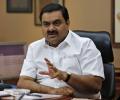
The clarification by the National Securities Depository (NSDL) - which is tasked with monitoring foreign portfolio investor (FPI) investment in domestic stocks - that the accounts of top investors in Adani group stocks remain 'active' has helped prevent a $500-million selloff of shares. Analysts said a freeze of the FPI accounts, as reported by some media outlets, could have prompted global index providers to cut weighting of four Adani group companies from their global indices. Brian Freitas, an analyst at independent research provider Smartkarma, said if the FPI accounts were indeed frozen, FTSE and MSCI would have reduced weighting of Adani group companies at the next rebalance, since it would have meant that the large part of the free float was not tradeable.

Easier dilution norms for mega initial public offerings (IPOs) have come into effect. Companies with post-listing market capitalisation (m-cap) of more than Rs 1 trillion will not be required to dilute a minimum of 10 per cent. The move to relax dilution norms is seen as a precursor to Life Insurance Corporation's IPO. The central government has said companies with an m-cap exceeding Rs 1 trillion will have to dilute Rs 5,000 crore and at least 5 per cent of their m-cap. Experts said the earlier framework discouraged large companies from listing since they were forced to offload a large volume of shares during the time of their IPO.

The submission was made by the UN Special Rapporteurs on the promotion and protection of the right to freedom of opinion and expression Irene Khan; on the rights to freedom of peaceful assembly and of association Clement Nyaletsossi Voule; and the right to privacy, Joseph Cannataci.
 © 2026 Rediff.com - Advertise with us - Disclaimer - Privacy Policy - Sitemap - Feedback - About us - Terms of use - Grievances